sábado, 14 de septiembre de 2013

Natural summer cycle: Work-Holidays-Work


Fig. 1. Sesión de posters durante la conferencia Conferencia IAPSO: North Atlantic and Climate Change. Poster session during the Conference IAPSO: North Atlantic and Climate Change.
Goteborg. Sweden. July 2013. Source: Raquel Somavilla.

A veces me disculpo con vosotros por no encontrar tiempo para el blog cuando tengo mucho trabajo. Esta vez no tengo esa escusa porque estaba de VACACIONES y aunque no era mi intención, me he tomado vacaciones de todo. Será que las necesitaba.

Sometimes I apologize for not finding time to blog when I have a lot of work. This time, I don’t have that excuse because I was on HOLIDAYS, and although it was not my intention, I've taken vacations from everything. It seems that I needed. 

Bueno, en realidad esto no es del todo cierto. Primero porque no he estado todo el tiempo de vacaciones. Antes de eso estuve en la ‘Conferencia IAPSO: North Atlantic and Climate Changede la que os hablé en la entrada anterior y de la que os dejé el enlace de la presentación en Facebook. Por si alguien se lo perdió aquí la tenéis de nuevo. Un par de cosas sobre la conferencia (no todo fue bueno en esta ocasión) antes de pasar a aquello que os puede interesar de mis vacaciones.

Well, actually that is not entirely true. First, because I haven’t been all the time on vacation. Before that, I was in the Conference IAPSO: North Atlantic and Climate Change, about which I told you in the previous post and I left you a link to my presentation on Facebook. In case anyone missed it, here you have it again. A pair of things about the Conference (not everything was good this time) before to move onto those things that can interest you from my holidays.

domingo, 30 de junio de 2013

When Science is as Science must be


Source

No hace falta recurrir al latín para entender que la ciencia (del latín scientĭa 'conocimiento') debe aumentar el conocimiento de todos. Es por ello, y aquí me repito como siempre, que a los científicos se nos exige que publiquemos en revistas especializadas los resultados de nuestro trabajo, lo cual como también os he contado no es una empresa tan fácil como uno pueda pensar en principio. Del hecho de que la ciencia deba suponer un avance del conocimiento también se deriva el que por ejemplo uno de los requisitos que debe cumplir la sección de Métodos de un artículo científico (para los que no estén familiarizados con el tema, en esta sección se cuenta cómo se ha llevado a cabo el estudio, es decir, con que datos, qué formulas o hipótesis de han aplicado, etc.) es que debe estar explicada de tal modo que el procedimiento aplicado por los autores puede ser puesto en práctica de nuevo por cualquier científico que lea el artículo. Aunque a veces uno piensa que está muy claro lo que ha hecho, siempre puede faltar algún pequeño detalle que le complica la existencia de una manera infinita al que quiere repetirlo. 
It is not necessary to resort to Latin to understand that Science (from latin scientĭa, meaning ‘knowledge’) must increase the knowledge of all of us. For this reason, and here I repeat myself –as usually-, scientists are required to publish their research in international research journals, which is not always an easy task as I have also told you. From the fact that science must conduct to an advance in knowledge, the ‘Methods’ section of a scientific article (for those not familiar with the topic, this mean the section that describes how the study was carried out, which data were used, which formulas or hypothesis were applied…) is required to be written in such a way that any other scientist will be able to repeat the procedure. Sometimes one can think that in her/his article is clear as water what she/he did, but just a small detail missing makes extremely difficult to repeat the experiment.
 
Sin embargo, ese no ha sido el caso en un artículo que he leído recientemente y que me ha permitido añadir otra pieza al puzzle que estoy tratando de resolver para el trabajo titulado ‘A downwards heat and salt injection mechanism linking mid-latitudes and Polar Regions in the North Atlantic del que ya os he hablado aquí y que presentaré dentro de un mes en la Conferencia IAPSO: 'North Atlantic and ClimateChange’.  

However, that was not the case of a paper that I recently read and that has allowed me to add another piece to the puzzle that I’m trying to resolve for the work ‘‘A downwards heat and salt injection mechanism linking mid-latitudes and Polar Regions in the North Atlantic’ –I told you about it here- and that I present presented in the Conference IAPSO: 'North Atlantic and Climate Change’

lunes, 24 de junio de 2013

The Zenit, the Nadir and the Moon at its Perigee.

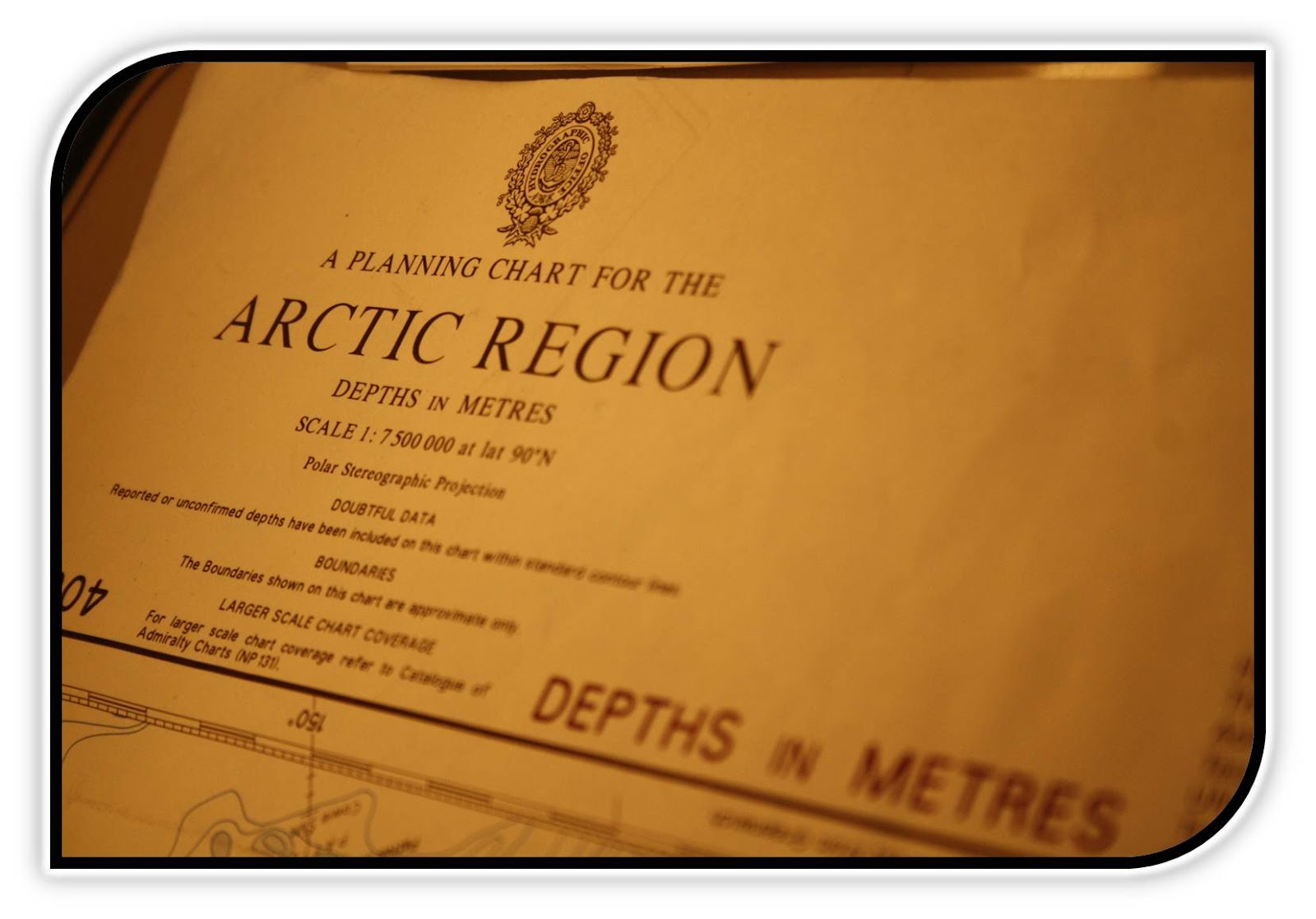
Fig. 1. Detail of a nautical chart of the Arctic Ocean. Source: Raquel Somavilla

Hay algo romántico, supongo que por eso de la aventura o de poder encontrar un tesoro pirata, en una carta náutica. Siempre me han encantado, pero más aún desde que estudie Navegación Marítima en la Universidad. Sí, eso es algo que se estudia en la Universidad también, como cualquier otra carrera, y como digo en mi pequeña introducción del blog he hecho un montón de cosas. Y lo cierto es que antes de estudiar Ciencias del Mar y hacer mi doctorado en Oceanografía, también estudie Navegación Marítima. Es algo que nunca estuvo en mis planes, pero las cosas surgieron así, y el hecho es que me gustó. Entre las asignaturas que más me gustaron está Navegación Astronómica. ¿Por qué me acuerdo ahora de esto? Pues porque hace tan sólo un par de días la luna ha estado es su perigeo, lo cual significa que ha estado a la distancia más corta de la tierra a la que se encuentra durante el año. De ahí, que al estar más cerca nos haya parecido visiblemente más grande. 

There is something very romantic in a nautical chart. I guess it exudes some kind of adventure feeling or that if you follow correctly you will find the Pirate’s treasure. They have always attracted me, but even more since I studied Maritime Navigation in the University. Yes, that is something that you can also study in the University as any other bachelor degree, at least in Spain. The point is, as I say in the short introduction of the blog, that I have done a lot of things, and this is one of them that I did before to study Marine Science and do my PhD in Oceanography. In fact, it was never in my plans, but things went like that, and the true is that I liked. Among the subjects that I liked the most is Astronomical Navigation. Why do I suddenly talk about this? Well, because just a pair of days ago the Moon was in its Perigee. It means that it was in its closer position to the Earth during the year. Because it was closer to us, we could have the impression that it was bigger than normally. 

martes, 11 de junio de 2013

About ‘NYT: Global Warming Taking a Break’

These are some brief comments to a post posting the New York Times article 'Global Warming Taking a Break'. Here, the link to Daily KOS where you can read the comments to this article. I would be happy to leave my comments directly there, but, to be honest, I have not been able to do so.
First, I agree completely with you, marsanges, that a very important paragraph of the article is ‘So the real question is where all that heat is going, if not to warm the surface. And a prime suspect is the deep ocean. Our measurements there are not good enough to confirm it absolutely, but a growing body of research suggests this may be an important part of the answer’.  By the way, marsanges, many thanks for leaving the link to my blog. I think you were especially thinking to leave the link to the post ‘High motivation’ where I wrote a pair of months ago about this topic.
Coming back to the NYT article, it is also important to note, as the article also points, that modeling work suggest that pauses in warming lasting a couple of decades should not surprise us. The work titled 'Model-based evidence of deep-ocean heat uptake during surface-temperature hiatus periods' by Meehl  et al (2011) and published in Nature Climate Change is a very good example.
I’m sorry MGross but I don’t agree with your comment ‘deep ocean temperatures have barely moved, and the data set isn't very good (due to the difficulty of collecting samples)’. There are plenty of recent works describing the rising temperatures of the deep ocean. About deep waters in the southern Ocean, I would recommend any of the papers published by Purkey and Johnson since 2010. I have a paper under review now in GRL on the same topic but for deep waters of the Arctic Mediterranean. I hope it will be accepted, and if it is the case it will be published with open access and I will be happy to leave you here the link.

It will be a pleasure if I can answer any question or comment that you can have both here or in the post previous High motivation.
Dedicated to marsanges: R.V. Polarstern in the last ice station close to the North Pole during the Arctic Cruise XXVII/3.  Source: Raquel Somavilla

martes, 28 de mayo de 2013

Some comments to fringe comments


Durante 5 minutos me pareció que volvía al Artico de la que volaba la semana pasada de Frankfurt a Bremen. During 5 minutes of a flight from Frankfurt to Bremen the last week, I had the impression that I was back in the Arctic. 


Siento mucho el retraso, no sólo porque tenía cosas importantes que contaros y no lo he hecho sino porque he de confesar que cuando dejo abandonado el blog me siento culpable. Menos mal que no me pagan por ello, sino no sé qué sería de mí.

Voy a empezar por centrarme en aquello que me parece más urgente de comentar, y sobre lo que muchos de vosotros habréis leído en las últimas semanas. No suelo dejar un post a medias pero el que tenía empezado tendrá que esperar un par de días más porque esto me parece más urgente. ¿Por qué? Pues, simple y llanamente, porque varios comentarios y alguna que otra entrada en un blog me han dejado patidifusa (¡qué graciosa palabra, por cierto!).
  1. ¡¡¡Pues no he visto comparar las ciencias relacionadas con el clima en aquellos aspectos relacionados con el cambio climático con la homeopatía!!!
  2. ¡¡¡No he leído … que no tenemos motivos por los que preocuparnos por las concentraciones de CO2 en la atmósfera puesto que, aunque aumentando, su concentración es minoritaria en comparación con otros gases que también forman parte de la atmósfera terrestre?
  3. …que la actividad volcánica puede conllevar variaciones más significativas de la concentración de CO2 que la actividad antropogénica?
  4. ...que el aumento de CO2 y de temperatura en los últimos 50-100 no es más que parte de la variabilidad natural?!!!
Intentaré contestar a cada una de estas cosas por separado para quede más claro el porqué de mi estupefacción.


I'm sorry for the delay, not only because I had things to tell you and I didn't do, but because,  honestly, I feel guilty when I leave the blog abandoned. Fortunately, I'm not paid for writing the blog. Otherwise, I don't know how I would handle it.

I will start with the more urgent issue that I think I must explain, and about which you probably have read in the last two weeks. Normally, I don't start a post until I have finished the previous one, but in this case I will make an exception. This is more urgent. Why? Well, simply, because I have seen several comments and some post in a blog that have completely astounded me. 
  1. Can you believe that I have read … how some people compare climate sciences in those aspects related with climate change with homeopathy? !!!
  2. … that we don't have reasons to worry about the increase of atmospheric CO2 because its minor concentration when compared with other gases in the atmosphere? 
  3. … that the volcanic activity can generate more significative variations of  CO2 concentration than the anthropogenic activity?
  4. … that the temperature and CO2 increase during the last 50-100 years is just  natural variability?

I will give a response to each of these statements separately to make clearer the reasons of my stupefaction. 

lunes, 29 de abril de 2013

Maybe I had a bad week


Antes de que nadie salga corriendo creo que estaría bien deciros que aunque el título del post pinta mal, podéis seguir leyendo sin miedo porque termina bien.

No sé para otros pero para mí lo más difícil de superar en mi trabajo es el miedo a que mi ‘escritura en inglés’ no sea buena. No digo ‘inglés escrito’ en lugar de ‘escritura en inglés’ porque me refiero a la escritura científica, la cual tiene sus peculiaridades. Pensaréis que quizá no sea para tanto; que si no sé cómo se dice algo para eso están los diccionarios. Pues sí, pero no es el vocabulario el que me preocupa. El caso es que la escritura científica, como ya os conté hace tiempo, es bastante estricta en su estilo. De hecho, hay unos cuantos libros escritos sobre el tema. Uno que me gusta especialmente es éste:

‘ScientificWriting. Easy When You Know How. Jenifer Peat. BMJ Books’

Si alguien también siente que necesita ayuda en el tema, se lo recomiendo.


First of all, don’t be afraid. There is no need to quickly close the page. Although the tittle of the post doesn't look good, you can continue reading because it has a happy ending.

I don’t know for others, but one of the things that I find especially difficult in my work is to overcome the fear that my English Writing isn’t good. Maybe you think that it can’t be so difficult, that in case I don’t know how to say something I can use the dictionary. Yes, I can, and I do, in fact, but the vocabulary isn’t what worries me. The case is that scientific writing, as I told you some time ago, has a quite strict style. Indeed, there are several books on the topic. One that I particularly like is:

‘ScientificWriting. Easy When You Know How. Jenifer Peat. BMJ Books’
  
I recommend it for those of you that feel you need also help on that.


martes, 16 de abril de 2013

EGU General Assembly 2013. If I were a time-rich woman…how many things I would like to do!


Un adjetivo que bien puede definir mis gustos es ecléctico. No sé si es bueno o malo pero en general la variedad de músicas, comidas, estilos, lugares, gente, etc. que me gusta es bastante amplia, y eso también incluye que encuentre interesante una gran variedad de disciplinas científicas. Eso se traduce en que durante conferencias como la de la EGU Viena -de la que os he hablado en el anterior post y donde no te queda más remedio que decidir a qué sesión acudir en cada momento porque muchas se celebran al mismo tiempo- me quede sin escuchar parte de las cosas que me gustaría. En teoría podría levantarme en medio de una sesión para ir a otra a escuchar otra charla pero me resulta de mala educación levantarme y que la persona que va a hacer la próxima presentación me vea. No sé si os hacéis a la idea de como es esto de las sesiones paralelas y las charlas o presentaciones. Os pongo un ejemplo. Imaginaros que en un cine están echando en dos salas distintas 4 episodios nuevos de la última temporada de dos de vuestras series favoritas, ej. 'Juego de Tronos' y 'The Big Bang Theory'. Poneros que habéis visto los episodios 1 y 2 de 'Juego de Tronos' y 3 y 4 de 'The Big Bang Theory'. Entráis en la sala donde echan Juego de Tronos para ver los episodios 1 y 2, pero luego os quedáis sin ver los capítulos 3 y 4 de 'The Big Bang Theory' porque os da vergüenza marcharos de la sala, pongamos que porque hay actores de Juego de Tronos en ella que pueden ver como os marcháis. El problema de la EGU Viena es que a veces tienes que dividirte entre 4 'salas de cine = sesiones paralelas' diferentes al mismo tiempo donde te interesan realmente sólo 2 'episodios = presentaciones'. Resultado final: que no puedes ver/escuchar todo lo que te gustaría.

Mis notas durante la sesión OS. 1 Open Sesion on Ocean Circulation